
Supporting Australia’s first steps into offshore wind energy
Through our network of specialist brands and strong presence in Australia and Europe, APEM Group brings decades of expertise to...


APEM Group was contracted by Gippsland Skies to deliver bird, marine mammal and megafauna aerial and boat-based baseline surveys for the Gippsland Skies Offshore Wind Project
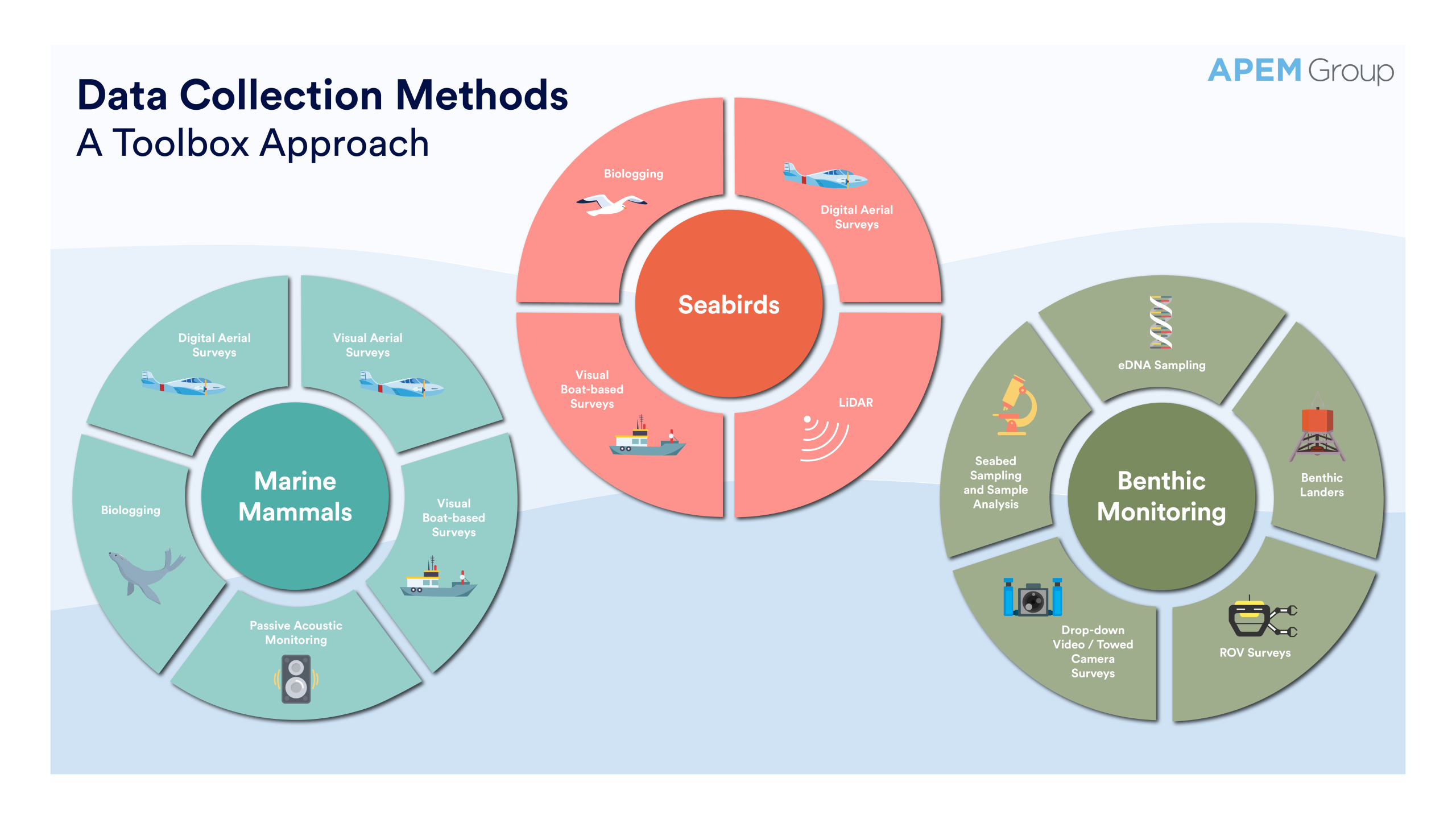
The scope of work was designed to include 28 Digital Aerial Surveys (DAS) with LiDAR, and 24 monthly boat-based surveys conducted in partnership with Biosis, part of APEM Group. Covering an area of more than 600 km², the data collected will inform future Environmental Impact Assessments (EIA) and help contribute to the protection of marine biodiversity.
This project marks APEM Group’s first dual-platform (digital aerial-boat-based) survey collaboration in the region and demonstrates our ability to deliver integrated, high-quality environmental data solutions offshore.
APEM Group demonstrated its expertise in delivering complex offshore survey programmes through a dual-platform approach. Coordinating aerial and boat-based teams, we successfully integrated LiDAR and Digital Aerial Survey (DAS) data with visual observations to provide a comprehensive baseline dataset. The long-term nature of the programme and the requirement for consistent, high-quality data collection across the vast marine environment posed logistical and analytical challenges. These were overcome through robust planning, advanced technology, and the experience of our specialist teams.
APEM Group applied its technical excellence and innovative methodologies to deliver a robust environmental monitoring programme, with 12 months completed to date. Our collaboration with Biosis, supported by Monash University, enabled the integration of boat-based data, enhancing the robustness of species identification and behavioural assessments.
This project exemplifies APEM Group’s environmental consultancy model for the offshore wind lifecycle, with a dedicated team of over 200 offshore wind specialists delivering consistent, high-quality outputs. Our local presence ensures that we meet Australian regulatory standards while leveraging global best practices.
With over 60 global offshore wind projects completed and a growing footprint in Australia, APEM Group is uniquely positioned to support the nation’s renewable energy ambitions. Our holistic, data-led approach, combined with local expertise and global insight, ensures that offshore wind developments are environmentally sustainable.
Want to learn more about how we’re using technology like LiDAR in offshore wind marine surveys?
Watch our webinar from the APEM Group Australia Offshore Wind Series: The Use of LiDAR in Offshore Wind Marine Surveys

Get hand-picked content from our subject matter specialists. Sign up to receive relevant updates, resources, and ideas that help you and your organisation.
We're here to help. Whether you're looking for tailored insights, support with a project, or just want to explore how we can work together, contact our team today.
Through our network of specialist brands and strong presence in Australia and Europe, APEM Group brings decades of expertise to...

Project Summary APEM was contracted to analyse samples from comprehensive environmental surveys for a gas field located 300 km northwest...
Understanding the environmental impact of offshore wind farms is critical for sustainable offshore energy development in Australia.