
Ecological Surveys Support Bridge Redevelopment at Dockside Canada Water
APEM Ltd., part of APEM Group, was commissioned by Assystem Energy (on behalf of Gardiner & Theobald LLP) to assess...

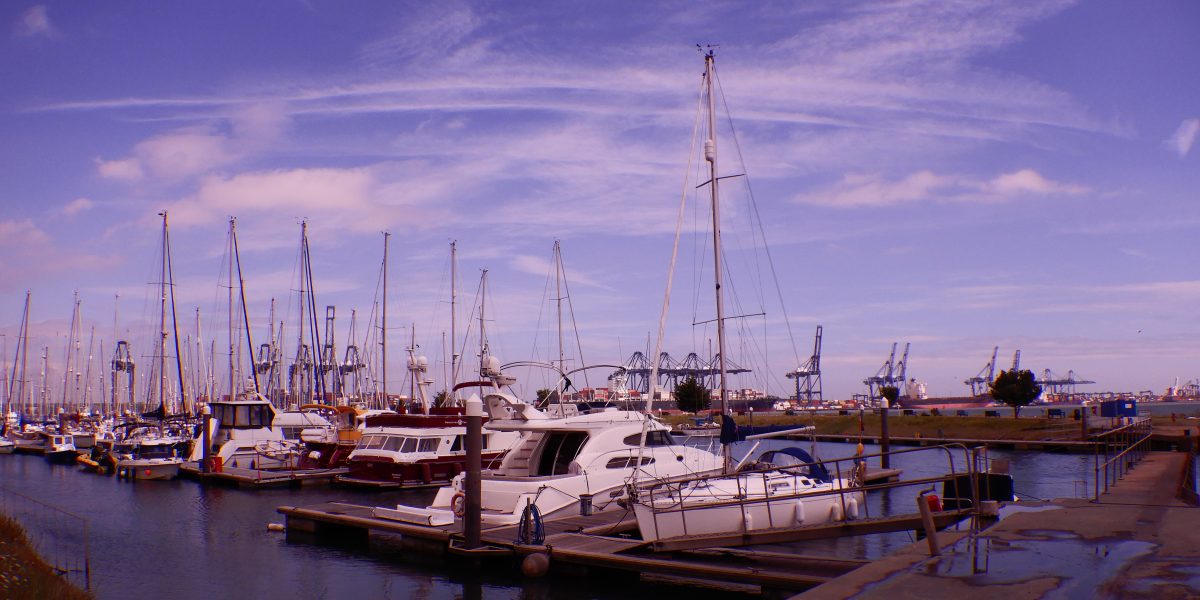
APEM Ltd., part of APEM Group, supported the development of the new Marine Biosecurity Plan created to protect the Stour and Orwell Estuaries. These estuaries hold internationally important environmental designations as a Special Protection Area, a Site of Special Scientific Interest, and a Ramsar site.
The plan was launched through a partnership between Natural England, Harwich Haven Authority, the Port of Felixstowe, the Port of Ipswich (Associated British Ports), and Trinity House. It introduces good practice measures intended to reduce the introduction and spread of invasive non-native species (INNS) across these heavily used waterways.
APEM was commissioned by Natural England following an earlier national audit that had identified the Stour and Orwell Estuaries as a priority area where no (or limited) marine biosecurity planning was in place.
APEM began work in late 2024 with an initial stakeholder engagement phase. This was followed by the full development of the Marine Biosecurity Plan, jointly commissioned and funded by the five partners, which took place from mid to late-2025, and the completed plan was handed over in January 2026.
Throughout the process, APEM worked closely with all five of the operational partners who participated in guiding the development of the plan.
APEM’s earlier assessment for Natural England had highlighted the Stour and Orwell Estuaries as a location that required urgent attention because of the high level of marine activity, including operations at the Port of Felixstowe.
After identifying this gap, Natural England initiated a staged approach that began with stakeholder engagement to determine local needs and the feasibility of developing a dedicated plan.
Once this foundation was established, Natural England and APEM helped bring together Harwich Haven Authority, the Port of Felixstowe, the Port of Ipswich, and Trinity House. Each of these organisations contributed equally to shaping the direction and expected outcomes of the plan.
A significant challenge emerged from the scale and diversity of activity within the estuaries. The area is used by many different groups, including commercial shipping operators, recreational boaters, anglers, marina users, and water sports communities.
Most biosecurity measures in the marine environment require voluntary cooperation rather than enforced regulation, which allows leeway for individual organisations or user groups to decide what actions are most appropriate for their operations in, or use of the marine environment.
APEM recognised that a conventional action-based plan would not necessarily be the most useful approach in this context. Instead, the team adapted the approach to focus on creating guidance that would be both practical and adaptable. This required a shift from assigning tasks to designing a flexible model that any stakeholder could use.
This structure would provide clear advice on biosecurity practice but also allow individuals and organisations to create their own tailored checklists, ensuring the plan could be realistically implemented across a wide range of activities.
APEM delivered the project through a combination of scientific expertise, detailed research, and comprehensive engagement with local users of the estuaries. The team led a series of in-person and online workshops that brought together representatives from interested sectors and other local stakeholders. These sessions allowed APEM to understand how the estuary is used on a day-to-day basis and ensured that the recommendations within the plan reflected real operational conditions.
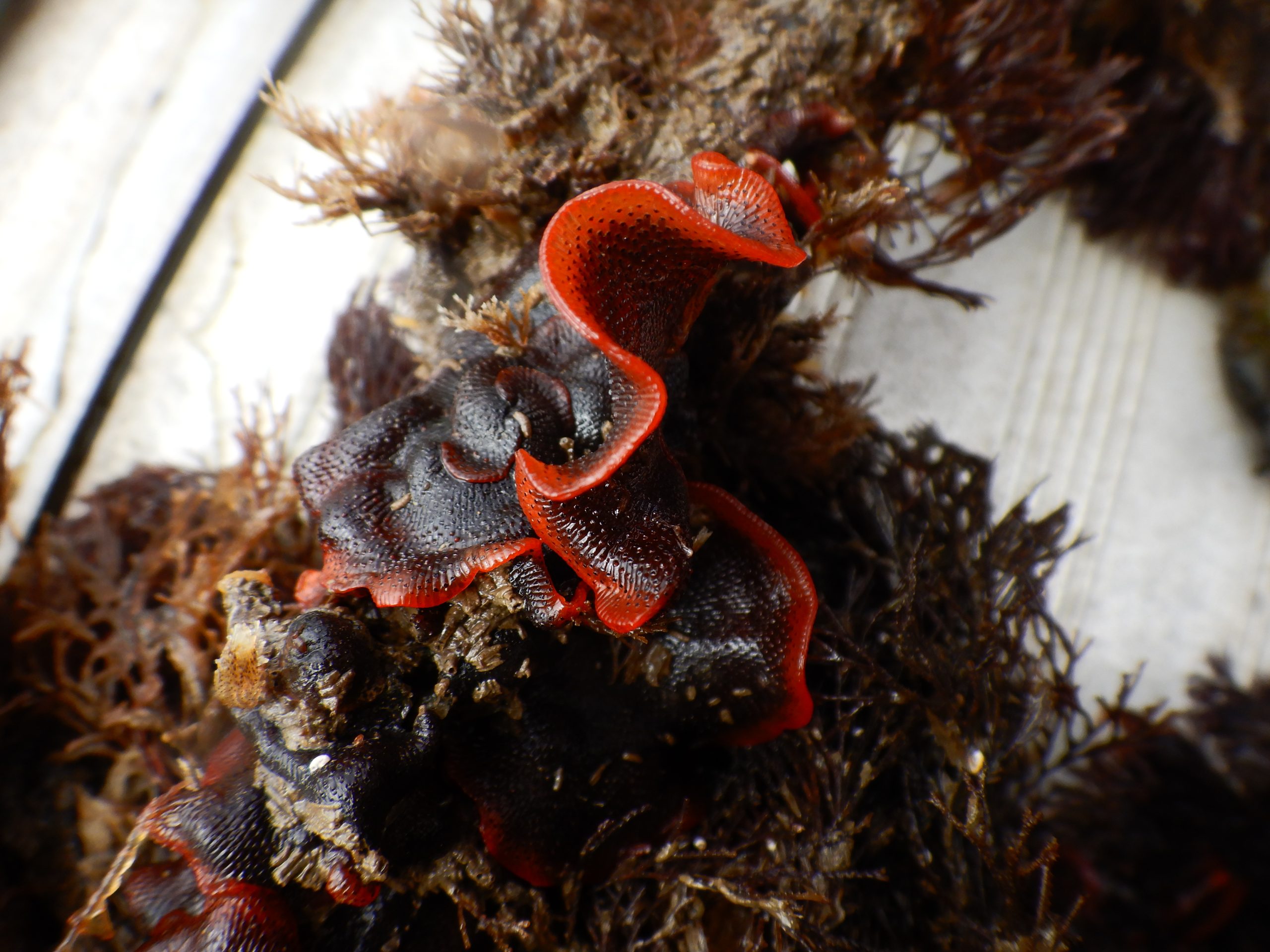
APEM also drew on support from its in‑house Marine Biolabs specialists, who joined the stakeholder engagement activities. The team visited local marinas ahead of the workshops and collected invasive species found in the estuaries. These specimens were used to demonstrate the presence and impact of INNS during the workshops and helped strengthen the case for adopting biosecurity measures.
In addition to engagement activities, APEM reviewed national and international guidance and tailored this information to the specific characteristics of the Stour and Orwell Estuaries. This enabled the development of accessible guidance materials that addressed the needs of different user groups. These materials allowed users to generate their own activity-specific biosecurity checklists, ensuring that the guidance in the plan could be applied flexibly and consistently.
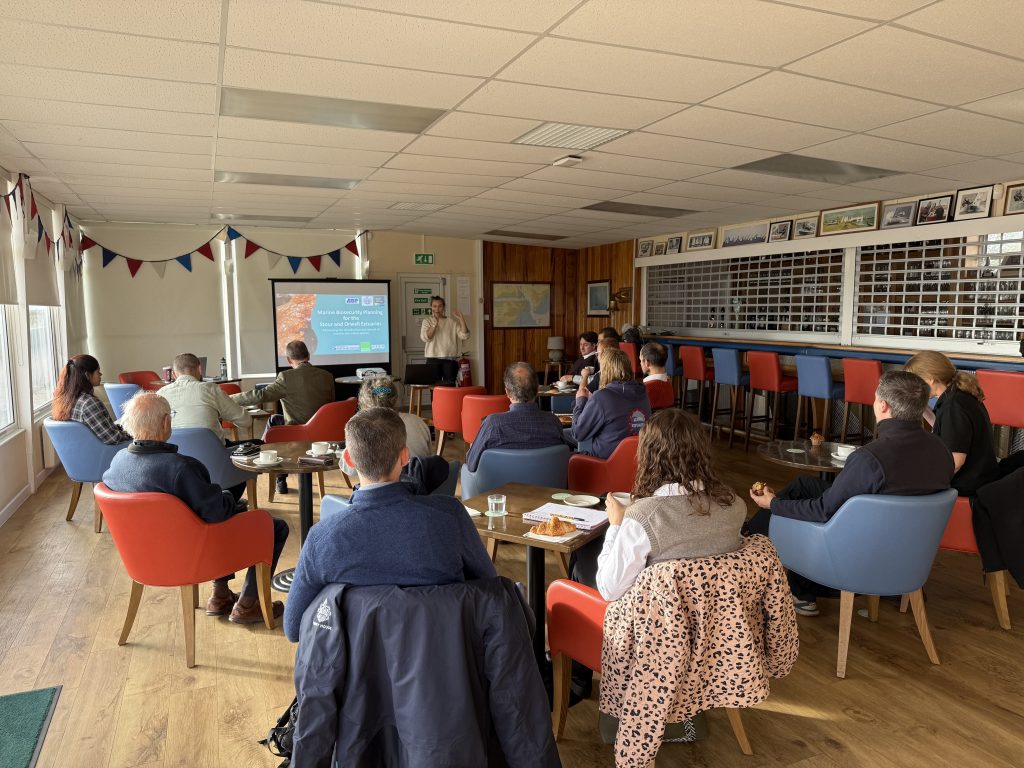
Lucinda Lintott, Senior INNS Consultant Scientist – APEM, delivering a presentation about invasive non‑native species and estuary protection for the Stour and Orwell Estuaries.
In addition to the development of the plan, the project team produced implementation guidance designed to support Natural England and the project partners in raising awareness of the biosecurity plan, keeping its content up to date, and ensuring long-term oversight. This implementation guidance recommends actions that could be taken over the short, medium, and long term to maintain the effectiveness of the biosecurity measures.
The same approach – combining nationally recognised best practice and on-the-ground, local stakeholder engagement – has been employed by APEM in other parts of England and the wider UK and is influencing early conversations about other locations identified as high risk. By applying a consistent process, APEM is helping move toward a more even and nationwide approach to marine biosecurity.
The development of the Marine Biosecurity Plan for the Stour and Orwell Estuaries illustrates how APEM Group combines scientific insight with collaborative engagement and practical planning. By responding to an identified industry need for consistent marine biosecurity planning and by creating guidance and tools that support everyday behavioural change, APEM has helped to strengthen the long-term protection of two ecologically and economically significant estuaries.
The approach used for this project has created a scalable model that can be adopted across other estuaries, contributing to greater consistency and resilience in marine biosecurity planning across the United Kingdom.
APEM and the project partnership team are grateful to all those who took part in the collaborative engagement activities, providing their time, expertise, knowledge and support, and contributing to the creation of this plan.
Further reading:
Marine Biosecurity Plan for the Stour and Orwell Estuaries – Harwich Haven Authority
Get hand-picked content from our subject matter specialists. Sign up to receive relevant updates, resources, and ideas that help you and your organisation.
We're here to help. Whether you're looking for tailored insights, support with a project, or just want to explore how we can work together, contact our team today.
APEM Ltd., part of APEM Group, was commissioned by Assystem Energy (on behalf of Gardiner & Theobald LLP) to assess...

In a first-of-its-kind initiative for the Channel Islands, APEM Group delivered a comprehensive marine biosecurity strategy for the States of...

APEM Group’s Marine Consultancy and Invasive Non-Native Species (INNS) teams collaborated with the Port of Cromarty Firth (PoCF) in Scotland...